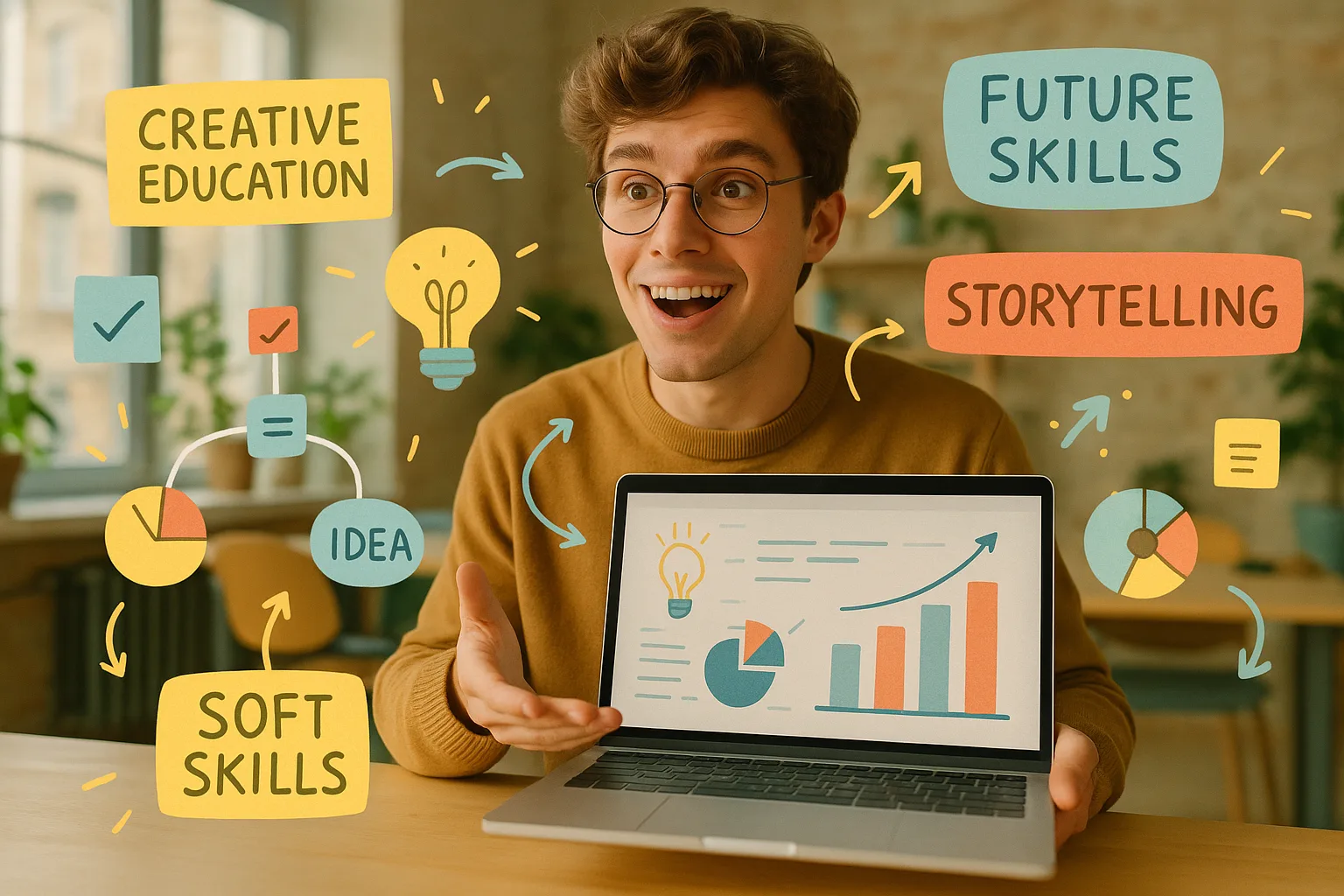
Learning for Tomorrow’s Port City: Modern, Creative Education for Novorossiysk
Introduction
Novorossiysk sits at the crossroads of trade, culture, and the Black Sea — a living classroom for modern education. To prepare young people for the future, schools and community organizations here should blend *future skills*, *visual thinking*, *storytelling*, *soft skills*, and *conscious learning*. This article outlines practical ideas and a roadmap to make Novorossiysk a regional leader in creative, future-ready education.
Why it matters
— The local economy — ports, logistics, tourism, fisheries — needs adaptable people who can problem-solve, collaborate, and think visually.
— Global change (automation, climate impacts on coastal cities) raises demand for creative, interdisciplinary thinkers.
— Soft skills and conscious learning increase employability, resilience, and civic engagement — crucial in a dynamic port city.
Core principles
— *Project-based and place-based*: learning anchored in Novorossiysk’s real challenges and assets.
— *Visual-first*: diagrams, maps, prototypes, and visual storytelling make complex systems tangible.
— *Human-centered storytelling*: people’s stories connect learners to community and build communication skills.
— *Metacognition and mindfulness*: learners reflect on how they learn, building lifelong adaptability.
Practical strands and classroom activities
1) Future skills — what to teach
— Critical thinking and systems thinking (e.g., port logistics, supply chains)
— Digital literacy and basic data skills (data visualization, simple sensors)
— Creativity and design thinking
— Entrepreneurial mindset (resourcefulness, pitching ideas)
Activities:
— Port-systems challenge: map the journey of a cargo container from dock to store; identify bottlenecks and propose solutions.
— Mini-hackathons: teams design low-cost tools for fishermen or small tourism businesses.
2) Visual thinking — tools and routines
— Teach sketching, journey mapping, and simple prototyping.
— Use visual templates: mind maps, empathy maps, storyboards.
Activities:
— Visual field journal: students sketch coastal habitats, harbor machinery, or local businesses and annotate insights.
— “Map the day” exercise: create a timeline-visual of a dock worker’s shift to understand labor, safety, and flow.
Tools:
— Low-tech: paper, markers, sticky notes.
— Digital: Canva for visuals, Miro for collaborative boards, simple data visualization tools (Google Sheets charts).
3) Storytelling — connect knowledge with people
— Narrative structure (beginning, conflict, resolution), personal interviews, oral-history projects.
— Use storytelling to teach civic pride, climate awareness, and career pathways.
Activities:
— Community story project: interview port workers, restaurant owners, and sailors; produce short videos or illustrated storybooks for younger students.
— “Future Novorossiysk” storytelling sprint: students create short stories imagining the city in 2035, integrating sustainability and technology.
4) Soft skills and conscious learning
— Communication, teamwork, empathy, adaptability.
— Teach reflection habits: learning journals, peer feedback with clear rubrics, guided mindfulness sessions before projects to improve focus.
Activities:
— Role-play negotiation between stakeholders (e.g., port authority vs. local fishers).
— Weekly reflection circle: what worked, what didn’t, personal learning goals.
Local project ideas (ready to adopt)
— Port-to-School Lab: collaboration with the port to host monthly projects — real data sets, site visits, mentor talks.
— Black Sea Biodiversity Studio: cross-disciplinary course combining science, visual art, and storytelling to document marine life.
— Heritage & Tourism Startups: student teams design sustainable tourism experiences that showcase Novorossiysk’s history and landscape.
— Makerspace at the Community Center: tools for prototyping, model ships, sensors for water quality — open after school.
Implementation roadmap (practical steps)
1. Pilot (3–6 months)
— Choose 2–3 schools or a community center.
— Run one interdisciplinary project (e.g., port-systems challenge + storytelling).
— Train 6–8 teachers with a short workshop on visual thinking and project-based learning.
2. Scale (6–18 months)
— Establish a shared makerspace or “learning lab.”
— Formalize partnerships: port authority, local businesses, museums, NGOs, city education department.
— Offer community workshops and student showcases to build visibility.
3. Embed (18+ months)
— Integrate modules into school curricula: visual thinking weekly routine, a year-long project, and assessment rubrics.
— Teacher continuous learning: peer coaching and monthly learning circles.
Partners and resources
— Local: port companies, fishing associations, tourism operators, cultural centers, municipal education office.
— Regional funding: Krasnodar Krai education grants, municipal innovation funds, CSR from port operators.
— Open resources: Khan Academy, Coursera for teacher upskilling; Miro/Canva for visuals; story frameworks like Pixar pitch or three-act structure.
Measuring impact (simple indicators)
— Learner outcomes: number of student projects, portfolios, and presentations; growth in reflective journal entries.
— Skill development: pre/post surveys on collaboration, problem-solving, visual communication.
— Community engagement: number of partnerships, public exhibitions, employer feedback on student readiness.
— Long-term: internships, entrepreneurial ventures, job placement in local industries.
Example 6-month pilot (concise plan)
— Month 1: Teacher workshop (visual thinking, project design). Recruit partners.
— Month 2: Launch Port Systems project — site visit, guest speakers, data gathering.
— Month 3–4: Team prototyping, storytelling training, soft-skills workshops.
— Month 5: Public showcase at a community venue or port facility.
— Month 6: Reflection, assessment, and scale-up planning.
Benefits to Novorossiysk
— Builds a local talent pipeline aligned with port, tourism, and environmental needs.
— Strengthens civic identity through storytelling and place-based projects.
— Improves resilience as learners gain adaptable, human-centered skills.
Call to action
Educators, business leaders, and city officials in Novorossiysk can start small: choose one school and one project, involve a port mentor, and run a six-month pilot. Visual thinking and storytelling turn the city into a classroom; soft skills and conscious learning turn students into active, adaptable citizens ready for the future.
If you want, I can draft a sample 6-month syllabus, a teacher workshop agenda, or a one-page pitch for the Novorossiysk port authority to present for partnership. Which would you prefer?