Introduction
Novorossiysk — a bustling port city on the Black Sea with a rich maritime heritage — is uniquely placed to become a laboratory for the next wave of education. Modern learning is no longer only about memorizing facts: it centers on future skills, visual thinking, narrative competence, soft skills and conscious learning. These approaches prepare young people for complex, uncertain futures while celebrating local identity and opportunity.
Why this matters for Novorossiysk
— Port economy, logistics and marine industries demand problem solvers, communicators and digital-literate workers.
— Cultural and environmental stories (fisheries, shipbuilding, coastal ecology) give powerful, local contexts for applied learning.
— Community institutions — museums, marine research centers, businesses — can partner with schools to create authentic projects that connect classroom learning to real life.
Core pillars of a modern creative education
1. Future skills
— Digital literacy, data sense, systems thinking, entrepreneurship, adaptability and civic competence.
— Goal: students who can learn continuously, solve novel problems and contribute to local economy.
2. Visual thinking
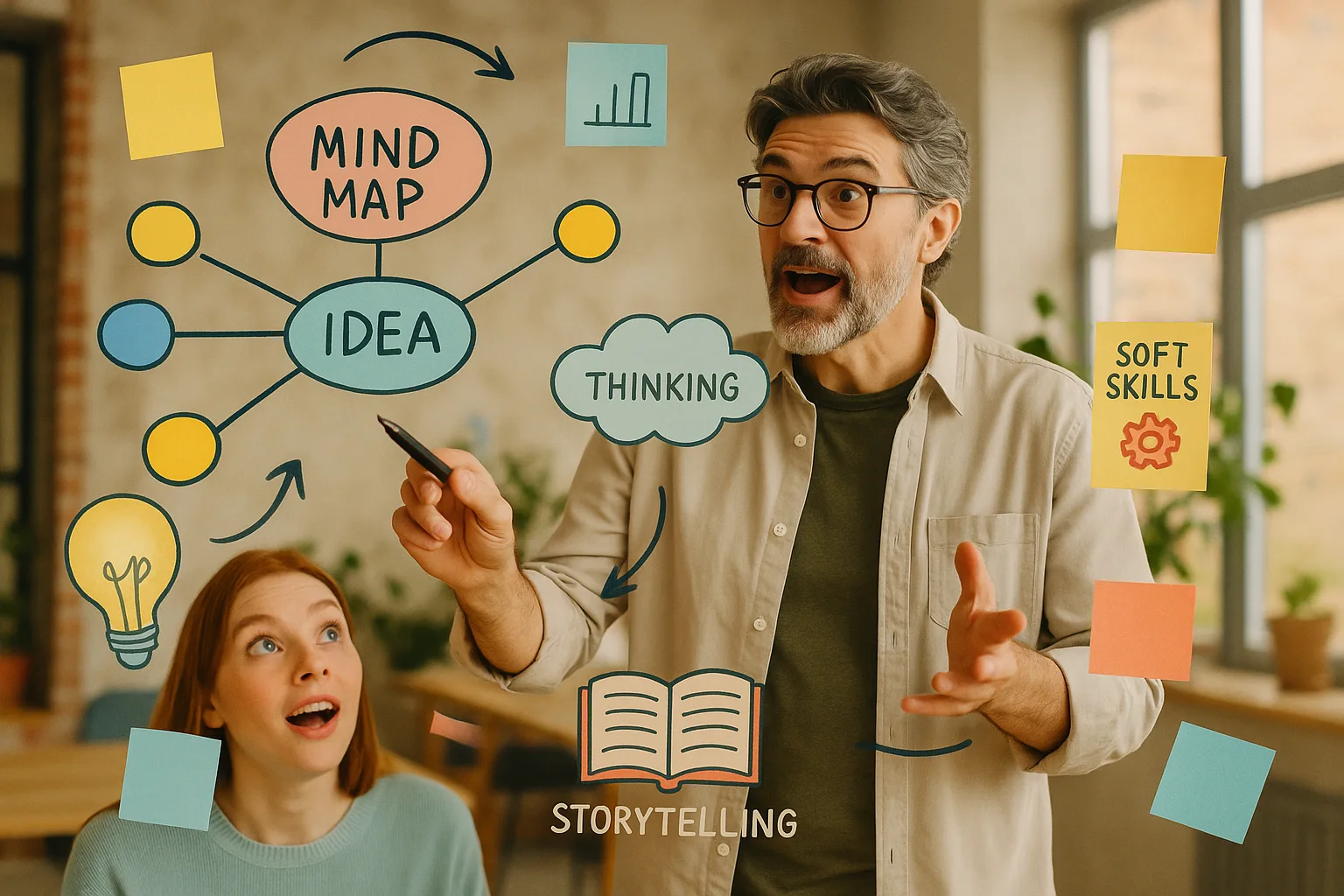
— Use maps, sketches, infographics, timelines, storyboards and models to make ideas visible.
— Visual tools speed comprehension, support memory and democratize complex information.
3. Storytelling
— Narrative frameworks for communication, persuasion and civic engagement.
— Teach students to craft stories with purpose: interview, structure, voice, multimedia delivery.
4. Soft skills
— Communication, empathy, teamwork, leadership, time management, resilience.
— Embedded through project work, peer feedback and reflection.
5. Conscious learning
— Metacognition, mindfulness, growth mindset and ethical awareness.
— Students learn how to learn, regulate attention and reflect on impacts of their choices.
Practical steps for schools and teachers in Novorossiysk
— Reframe units around local, meaningful problems (project-based learning).
— Example: “How can we reduce plastic waste in our harbor?” integrates science, data, design and civic action.
— Use short visual routines every lesson:
— Quick sketch of a concept, a concept map on the board, or a two-minute visual summary.
— Start each class with a 3–5 minute conscious learning routine:
— Breathing, goal-setting and a quick reflection question (What will I try differently today?).
— Teach storytelling as a skill:
— Practice interviewing local workers, creating audio/video profiles, and presenting findings to the community.
— Assess soft skills with rubrics and reflections:
— Combine teacher observation, peer feedback and student self-assessment.
Sample projects and lesson ideas tied to Novorossiysk
— Port Supply Chain Map (Visual Thinking + Systems)
— Students create layered maps showing goods, routes and stakeholders; present flow bottlenecks and propose improvements.
— Oral Histories of the Harbor (Storytelling + Empathy)
— Interview fishermen, sailors and dockworkers; produce audio stories or illustrated books for the municipal museum.
— Marine Litter Startup (Entrepreneurship + Design)
— Teams prototype low-cost solutions, run a small campaign, and pitch to local businesses or the city council.
— Data Visualization of Weather and Shipping (Digital + Critical Thinking)
— Use simple tools to turn public data into charts and infographics that explain seasonal patterns and risks.
— Climate-Ready School Plan (Systems Thinking + Civic Action)
— Students assess school vulnerabilities (flooding, heat), research solutions and present an implementation plan.
Community partnerships and spaces
— Museums and cultural centers: co-create exhibitions of student work and host storytelling nights.
— Port companies and logistics firms: offer site visits, mentorship and project briefs.
— Local NGOs and environmental groups: partner on coastal clean-ups and data collection.
— Libraries, art studios and after-school centers: host visual thinking and media-making workshops.
— Municipal government: sponsor public presentations and small grants for student projects.
Teacher training and professional development
— Short, practical workshops: visual facilitation, story-based assessment, project design, mindful classroom techniques.
— Peer learning communities: monthly lesson swaps and reflective practice groups.
— Online courses and microcredentials for future skills and digital tools.
— Incentivize classroom experimentation with microgrants and showcase events.
Measuring impact
— Use mixed indicators:
— Skills portfolios (student artifacts: videos, infographics, prototypes).
— Rubrics for collaboration, communication and problem-solving.
— Community feedback (partners, audiences).
— Student reflection journals tracking growth in metacognition and wellbeing.
— Run pilots (one grade or one school) for a semester, collect data, iterate and scale.
Implementation roadmap (simple, practical)
1. Convene stakeholders: school leaders, teachers, parents, port reps and museum staff.
2. Define 2–3 pilot projects linked to local needs (one STEM, one humanities, one civic).
3. Run teacher workshops and plan integrated units.
4. Launch pilots, host midterm sharing sessions with community.
5. Assess, refine and expand to more classes or schools next year.
Resources and tools (starter list)
— Low-cost visual tools: large paper, sticky notes, colored markers, tablets with basic drawing apps.
— Free online platforms for storytelling and data viz: simple audio recorders, Canva, Google Sheets + charts.
— Local venues: Novorossiysk Maritime Museum, municipal libraries, community centers.
— Potential partners: local shipping companies, environmental NGOs, universities in Krasnodar Krai.
Conclusion — A call to Novorossiysk’s educators and community
Novorossiysk has the stories, the challenges and the partners to make modern creative education a local strength. By centering visual thinking, storytelling, future skills, soft skills and conscious learning around meaningful local projects, schools can prepare young people not only to succeed, but to lead civic and economic renewal. Start small, collaborate broadly, and let the harbor’s rhythms shape learning that matters.
If you want, I can draft a ready-to-use semester plan for one pilot class (age group and subject of your choice), a teacher workshop outline, or sample assessment rubrics tailored to Novorossiysk schools. Which would you like next?