Why Novorossiysk needs a modern, creative approach to education
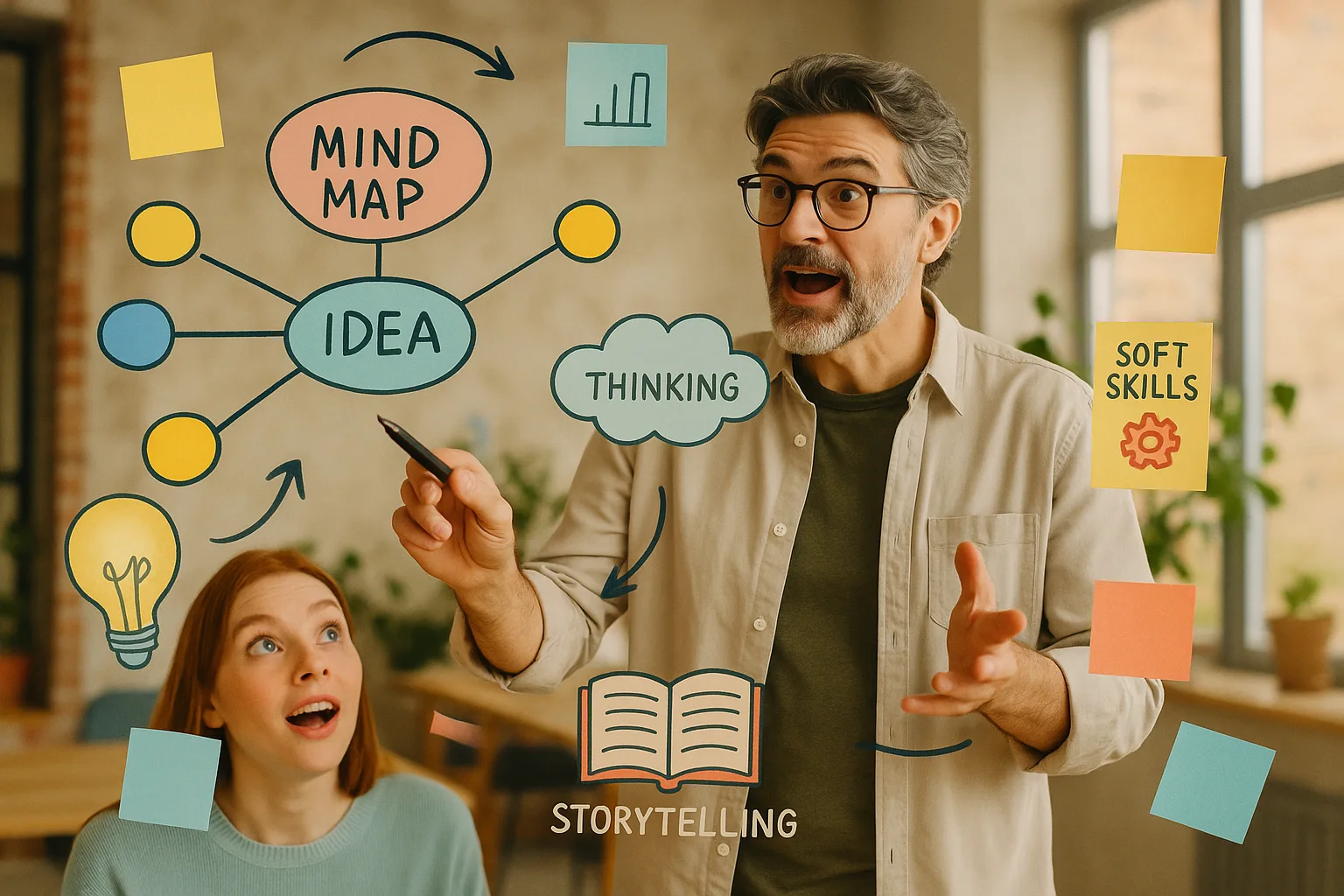
Novorossiysk is more than a port city — it’s a crossroads of trade, culture and coastal life. As automation, digital logistics and tourism reshape local jobs, young people need *flexible thinking*, *empathy*, and *creativity* alongside technical knowledge. Modern education that centers future skills, visual thinking, storytelling, soft skills and conscious learning prepares students to thrive in changing workplaces and civic life.
Five pillars for education that fits the future
— *Future skills*: critical thinking, digital literacy, systems thinking, entrepreneurship and adaptability. Skills that let learners move between roles and industries.
— *Visual thinking*: using sketches, maps, infographics and prototypes to make complex ideas visible and actionable.
— *Storytelling*: narrative skills to explain ideas, preserve local memory, market tourism, and build social cohesion.
— *Soft skills*: collaboration, communication, emotional intelligence, conflict resolution — the human skills machines can’t replicate.
— *Conscious learning*: metacognition, reflection, mindfulness and intrinsic motivation — learning that’s self-aware and sustainable.
How these pillars connect to Novorossiysk’s strengths
— Port and logistics: students can learn systems thinking and digital tools by mapping supply chains and simulating port operations.
— Tourism and culture: storytelling and visual media bring local history, culinary traditions and coastal landscapes to visitors and residents.
— Small business and crafts: entrepreneurship programs help makers and service providers turn skills into resilient livelihoods.
— Community resilience: soft skills and conscious learning strengthen civic participation and collective problem-solving.
Concrete classroom and community ideas
— Port-as-Classroom project
— Students create visual maps of cargo flows and propose small improvements.
— Cross-disciplinary teams: economics, geography, IT and language arts.
— Digital Story Maps
— Combine photos, oral histories and maps to tell local stories of neighborhoods, landmarks and sea life.
— Publish online for tourists and schools.
— Design Sprint for Civic Problems
— One-week intensive where youth identify a local issue (waste collection, public space), prototype solutions and pitch to stakeholders.
— Visual Thinking Labs
— Weekly sessions teaching sketch-noting, journey-mapping and prototyping with low-cost materials.
— Storytelling & Performance Festivals
— Intergenerational events where elders share memories, and youth adapt them into podcasts, short films or plays.
— Soft-Skills Micro-credentials
— Short badges for teamwork, public speaking, conflict mediation that are recognized by local employers.
— Mindful Classrooms
— Five-minute reflective routines, learning journals and peer-feedback circles to build metacognition and emotional regulation.
For teachers and school leaders: a practical roadmap
1. Start small: pilot one interdisciplinary project each term that includes visual outputs and a public presentation.
2. Build assessment for skills: use rubrics that measure communication, creativity and collaboration as well as knowledge.
3. Train teachers: host workshops on visual facilitation, story-based lesson design and mindful classroom practices.
4. Partner locally: invite port companies, museums, tourism boards and NGOs to co-design projects and offer mentorship.
5. Share outcomes: host community evenings and online galleries to celebrate student work and attract sustained support.
For parents and local businesses
— Parents: encourage storytelling at home, photo journals, and family interviews to train narrative and reflective skills.
— Businesses: offer real-world briefs, internships and judges for design sprints. Recognize soft-skill badges when hiring locally.
— Civic groups: sponsor public exhibitions of student work and fund small maker spaces in community centers.
Low-cost tools and starter resources
— Visual notebooks and cheap sketching kits for every classroom.
— Free storytelling platforms (audio recording apps, free blog services, social media) for student publishing.
— Local walks and interviews: low-tech fieldwork that produces rich material for projects.
— Teacher peer groups for sharing lesson plans and assessment rubrics.
Measuring impact
— Track both cognitive and non-cognitive gains: portfolios, peer reviews, employer feedback and attendance/engagement metrics.
— Run short-term pilots and iterate: 8–12 week cycles allow rapid refinement and visible community results.
Call to action
Novorossiysk can turn its local identity into an educational advantage: by blending visual thinking, storytelling and conscious learning with future-focused skills, the city will cultivate young people who are adaptable, creative and rooted in community. School leaders, parents, businesses and cultural institutions can begin today: choose one pilot project, invite a local partner, and showcase the results to the community.
Embrace learning that is human, visual and purposeful — so Novorossiysk’s next generation can both preserve what matters and invent what comes next.